
Community Integral Development
- Home
- Community Integral Development
The CID Project
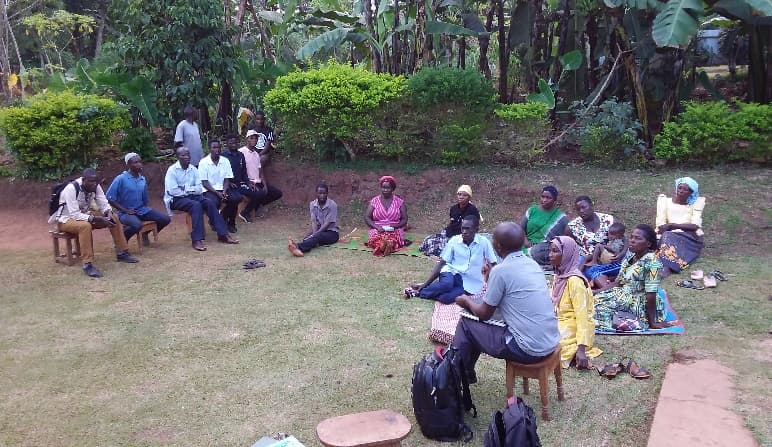
The Community Integral Development (CID) project is a voluntary initiative designed by LRFDT to strengthen social and economic development at the grassroots level. Though unfunded, CID thrives on the spirit of collaboration, where the organisation and the community share responsibilities to create lasting impact.
Our purpose. CID was born out of a desire to remain relevant and responsive to community needs. It focuses on empowering individuals and groups to take charge of their development through collective action, resource sharing, and mutual accountability.
Areas of Focus
CID works across three connected strands, because a community rarely improves in only one of them at a time.
Social Development
Promoting education, health, and community cohesion.
Economic Development
Encouraging savings, entrepreneurship, and local production.
Environmental Stewardship
Supporting clean, sustainable practices that protect our surroundings.
Built on Partnership
CID works because responsibility is shared. LRFDT provides technical guidance, training, and coordination, while community members contribute their time, ideas, and local resources, together building a foundation for progress that belongs to everyone.
Our Goals
- Support education & skills
- Improve health & sanitation
- Boost local livelihoods
Shared Responsibilities
- Voluntary participation
- Collaborative efforts
- Community empowerment
Community Impact
- Strengthening social bonds
- Enhancing the local economy
- Improving quality of life
LRFDT provides
Technical guidance, training, and coordination: the structure and know-how that turn community energy into lasting results.
Community members contribute
Time, ideas, and local resources: the ownership that makes every outcome genuinely theirs.
How CID Works
Every CID cycle follows six steps, each one driven with the community rather than for it. Nothing moves to the next stage until the community has shaped it.
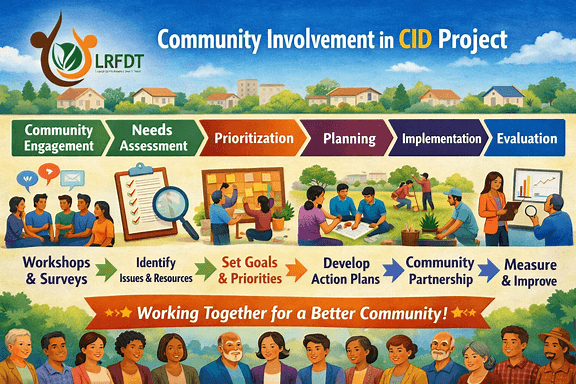
Community Engagement
Workshops & surveys
We start by listening, bringing community members together to open the conversation.
Needs Assessment
Identify issues & resources
Together we map the real challenges and the local resources already available.
Prioritisation
Set goals & priorities
The community decides what matters most and what to tackle first.
Planning
Develop action plans
Clear, practical action plans are drawn up with roles and timelines.
Implementation
Community partnership
Plans are put into action, with LRFDT and community members working side by side.
Evaluation
Measure & improve
We review what worked, learn from what didn't, and improve the next cycle.
The Economic Strand
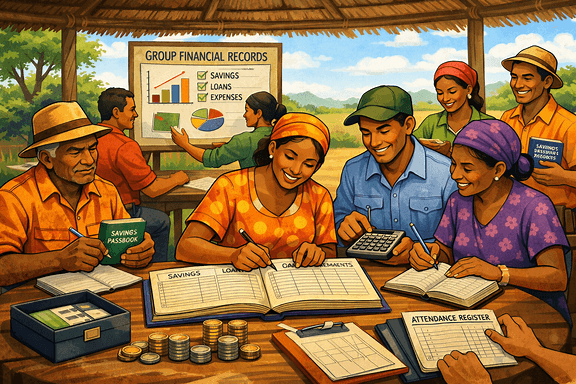
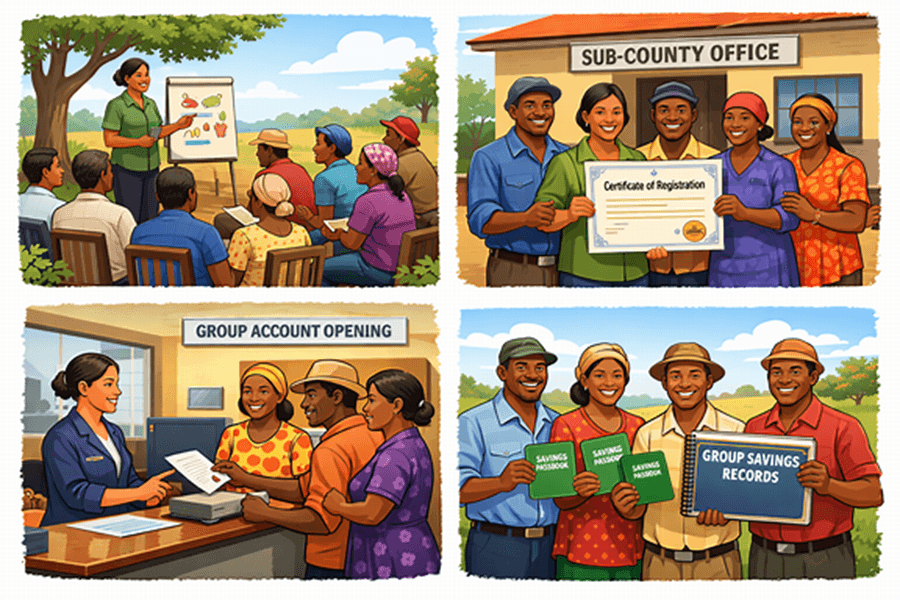
Much of CID's economic work runs through our savings and credit programme, training groups in financial management, record keeping, legal registration, and access to formal banking.
- Savings and credit training
- Group record keeping
- Legal registration & group identity
- Group bank accounts & credit access
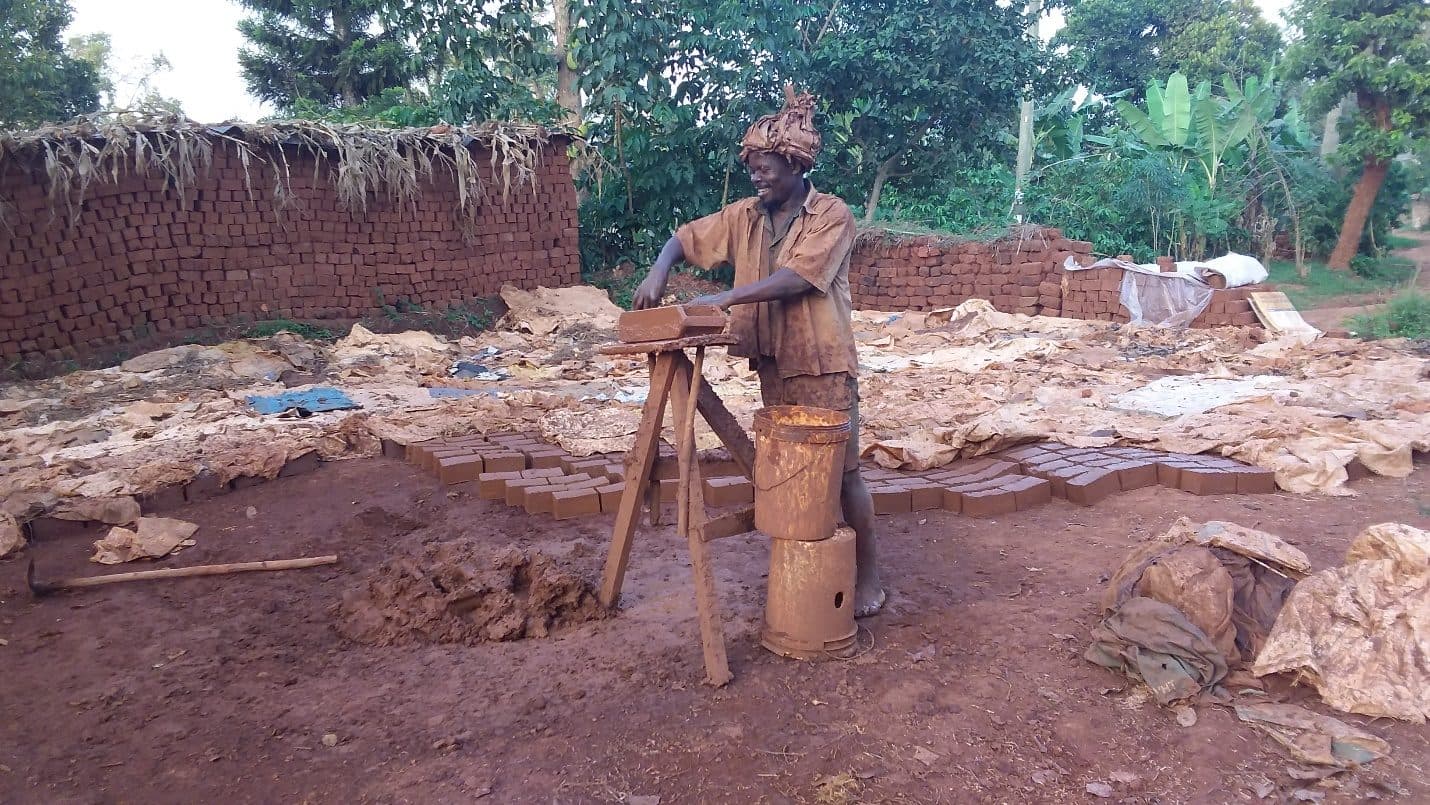
“I started with the soil beneath my feet.”
Lumbuye Saulo of Kirangira, Mukono, at the job where he earns a living
Where
Kirangira, Mukono
Livelihood
Brickmaking
Savings group
Kwagalana Welfare Initiative
They meet
Every week
Community Empowerment in Action
CID believes in unlocking the potential already inside a community by encouraging people to use the resources around them. Saulo took that to heart. He turned locally available materials into a livelihood, making bricks that support both his family and the wider community.
His story is a testament to how empowerment, when matched with initiative, can build lasting change.
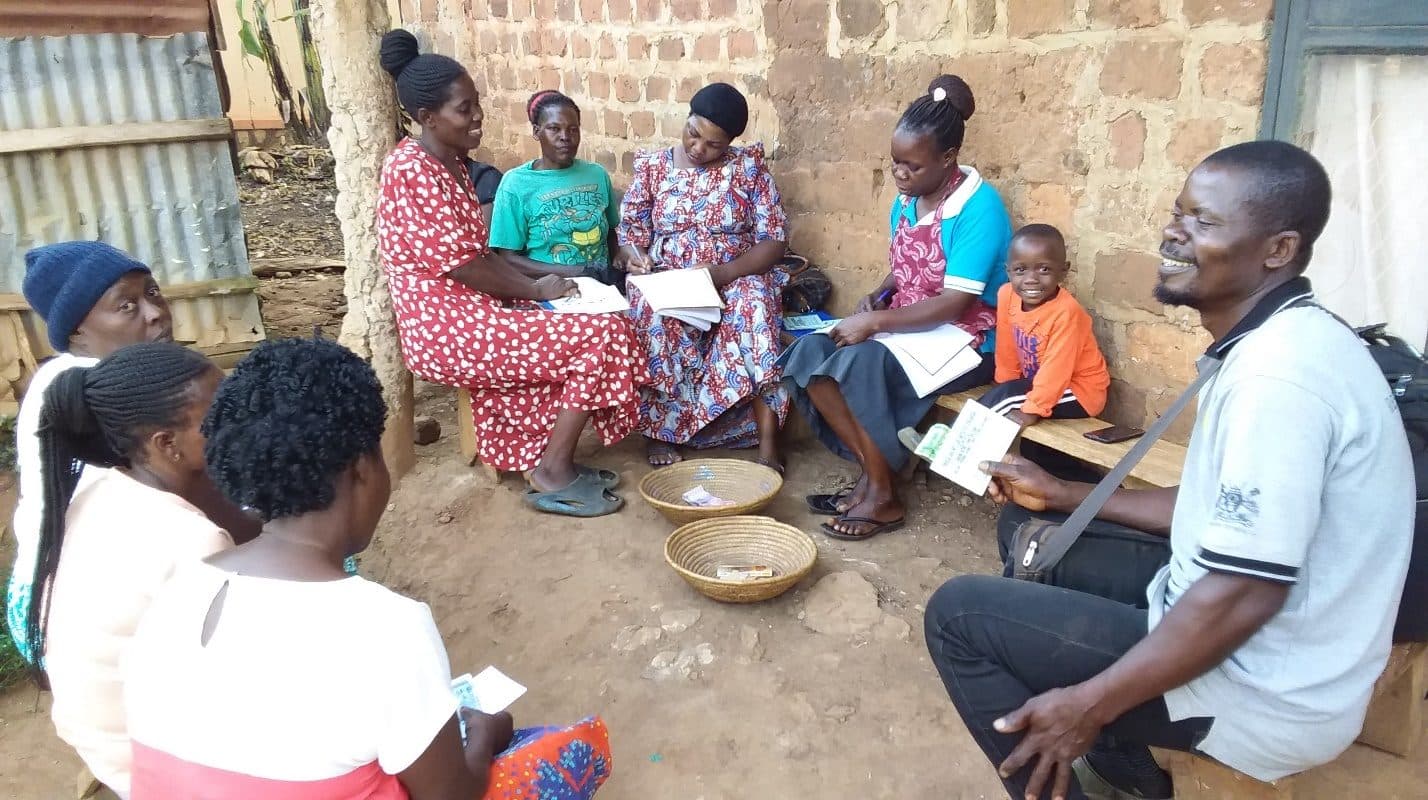
Kwagalana Welfare Initiative
After starting his brickmaking journey, Saulo joined hands with fellow community members and, with assistance and guidance from LRFDT, they formed Kwagalana Welfare Initiative Kirangira. Every week they come together to save money, building a culture of financial discipline and mutual support.
LRFDT renders technical support, guidance, and periodic monitoring of the group's activities. The group's mission is:
To provide a financial fallback position for the youth and the wider community.
To build a strong culture of savings as a sustainable financial foundation.
Through this initiative Saulo not only secures his own future but also finds strength in the group, borrowing when needs arise and contributing to the welfare of others. This savings circle shows how unity and resourcefulness can empower communities to thrive.
“In Kwagalana Welfare Initiative, we save together, borrow when in need, and stand as one family. Unity and discipline are the true wealth of our community.”
Lumbuye Saulo
“Young people, do not wait for opportunities to come from outside. Around you are resources we can use together to create work, income, and dignity. I started with the soil beneath my feet, and today I am proud to contribute to my community. Be creative, be determined, and you will change your future.”
Saulo shows that progress begins when we refuse to sit idle, whether shaping bricks from the soil or saving weekly with Kwagalana Welfare Initiative. His journey reminds us that having something to do, however small, builds strength, dignity, and a sustainable future.
Why CID Matters
CID represents the power of volunteerism and unity. It reminds us that meaningful development doesn't always depend on external funding; it begins with people who care enough to act.
Through shared effort, we nurture resilience, dignity, and hope within our communities.
“Together we build, and we welcome partnerships and funding opportunities to grow our impact.”
CID runs on volunteerism and collaboration. Join us, partner with us, or help us take this model further.
Partner With Us